




How World Cup Hydration Breaks Are Changing Games
Thomas Tuchel's complaint before England-Ghana lands in a bigger World Cup debate: the three-minute pauses protect players, but they also reset tactics, fracture momentum and turn Group L matches into four distinct acts.
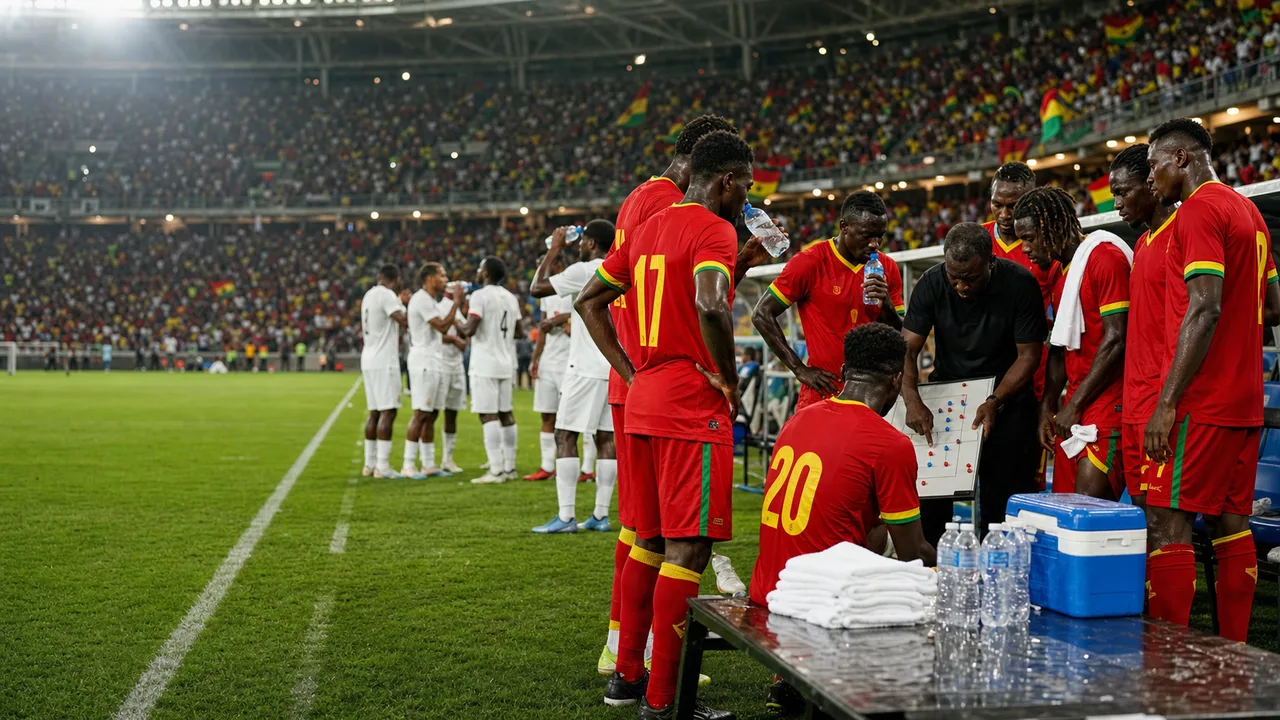
Thomas Tuchel's complaint before England meet Ghana is not just an England story. It is now a Ghana story too, because the Black Stars have already lived through the new rhythm. Their 1-0 win over Panama in Toronto paused in cool, wet conditions, drew boos from the crowd and gave both benches a chance to pull players in before the match could run naturally to half-time.
FIFA's rule is simple: a three-minute hydration break midway through each half, in every World Cup match, regardless of weather, roof or venue. The intention is player welfare across a summer tournament spread through the United States, Canada and Mexico. The effect is more complicated. Matches are starting to feel less like two halves and more like four tactical episodes.
Open the group page before reading the live implications.
Next match England vs GhanaThe break debate now lands directly on the Black Stars.
Live read Recheck the post-break patternMomentum before a stoppage is not always momentum after it.
Why Tuchel's complaint has travelled
Tuchel is not rejecting hydration in extreme heat. His point is narrower: when the stoppage is automatic, it changes football's natural argument. A team building pressure can be pulled away from the box. A side hanging on can suddenly breathe, reorganise and receive a full tactical message from the technical area.
That is why his phrase about match identity landed. Football is one of the few elite sports where managers normally have to influence a game from the edge while players solve long spells themselves. The hydration break gives every coach a clean, predictable intervention point. That is good for organisation, but it changes the feeling of momentum.
They break the match almost into four quarters.
Ghana have already felt the break
The Ghana angle is not theoretical. Reuters reporting from Group L noted boos in Dallas during England's opener against Croatia and again in Toronto, where Ghana and Panama were playing under steady rain rather than heavy heat. That is the image the rule has struggled to escape: players being waved toward the benches in conditions where the crowd can see no obvious emergency.
Panama coach Thomas Christiansen was blunt after Ghana's 1-0 win. A break lets coaches make corrections, he said, while also pointing to television money as part of the reality around the stoppage. For Ghana, that matters because the Black Stars are built to hurt teams in bursts through Mohammed Kudus, Antoine Semenyo and quick transitions. A scheduled reset can cool that heat as much as it cools bodies.
What the football world is saying
The debate is no longer only fans grumbling about adverts. Coaches, players and pundits are now arguing over what football is supposed to feel like when every half has a guaranteed interruption.
Thomas Tuchel
"changes the identity of a football match"
Tuchel's concern before facing Ghana is that the pauses do more than cool players. They interrupt the pressure, the crowd and the emotional build of a half.
Mauricio Pochettino
"cut the rhythm of the game"
Pochettino objected after a test match played indoors in Atlanta, where the temperature was comfortable and the break still arrived on schedule.
Marcelo Bielsa
"adds nothing and takes away a lot"
Bielsa's complaint is philosophical as much as tactical: football's continuous pressure is part of why people love it.
Virgil van Dijk
"look at it in every game separately"
Van Dijk accepts the player-welfare case in real heat, but wants condition-led judgment rather than a fixed rule in every venue.
Rudi Garcia
"coaching break more than a cooling break"
Garcia has been one of the clearest supporters because the stoppage gives coaches a live tactical huddle inside each half.
Carli Lloyd and Alexi Lalas
"the end of the first quarter"
Lalas turned the opening-match pause into a quarter-time joke; Lloyd's response was shorter and harsher: she hated it.
The tactical change: football now has reset points
The first obvious change is tactical. A coach who sees his full-back being dragged inside, his midfield screen opening too early or his winger failing to track runners no longer has to wait for half-time. He gets a scheduled huddle after roughly 22 minutes, then another in the second half.
That shifts the value of pre-match planning. The opening plan still matters, but it has a shorter runway. The team that wins the first 20 minutes may find the opponent patched up after the break. The team that starts poorly gets a rescue point before damage becomes fatal.
Opening plan has a shorter shelf life
Teams no longer need to survive an entire half before hearing from the bench. A fast Ghana start can still hurt an opponent, but the first reset arrives early.
The first correction window matters
Coaches can fix pressure triggers, switch marking assignments and calm a team that has been pinned back. That makes the spell after the first break a separate read.
Fatigue is interrupted
Late-half attrition used to be a pure player-management test. Now the break gives both sides a recovery point before the final push.
The emotional change: pressure is harder to sustain
Momentum in football is not only shots and possession. It is the sound of a crowd rising, a back line dropping five yards, a favourite starting to look uncertain, or an underdog sensing that the next duel can tilt the match. Hydration breaks interrupt that emotional climb.
That is the part Tuchel is talking about when he says football is better when a half is played in one go. The longer a team has to suffer without a bench huddle, the more football becomes a test of on-pitch leadership. A scheduled stoppage gives structure back to the coaches.
Momentum before the whistle is only half the story now.
The welfare case still matters
The argument against automatic breaks should not be allowed to turn into an argument against player safety. Some venues at this World Cup can be hot, humid and draining. FIFA has also had recent evidence from North American summer tournaments that extreme conditions can affect players and fans.
The question is whether one tournament-wide rule is the best answer. FIFA says equal treatment across all teams is the point. Critics such as Van Dijk argue that heat should be judged match by match. That is the real policy dispute: consistency versus conditions.
What it changes for Ghana and live betting
For Ghana supporters, the England match is a clean test case. If the Black Stars start fast and pull England into a stretched game, the first break may help Tuchel correct the shape. If England pin Ghana back early, the same stoppage may help Ghana settle, reset the press and get Kudus or Semenyo higher up the pitch.
For bettors, the practical lesson is clear: do not read a half as one uninterrupted trend. Read the opening spell, the first post-break spell, the first 20 minutes after half-time and the final post-break run as related but distinct phases. If a team looked dominant before the break, wait to see whether the pattern survives the restart before chasing a live price.
The verdict
Tuchel's concern is persuasive because it is honest about both sides. As a coach, he likes the extra control. As a football person, he thinks the game loses something when pressure is broken into neat sections. Ghana's own tournament has already shown why the complaint is not abstract.
Hydration breaks may protect players in the toughest conditions. They may also give coaches useful tactical access. But when the same stoppage arrives in cool rain, indoors, or just as a match is catching fire, it feels less like a medical safeguard and more like a new structure for the sport. That is why this debate will not disappear after England-Ghana.